Nalgene Clip Collar
Why I Like It
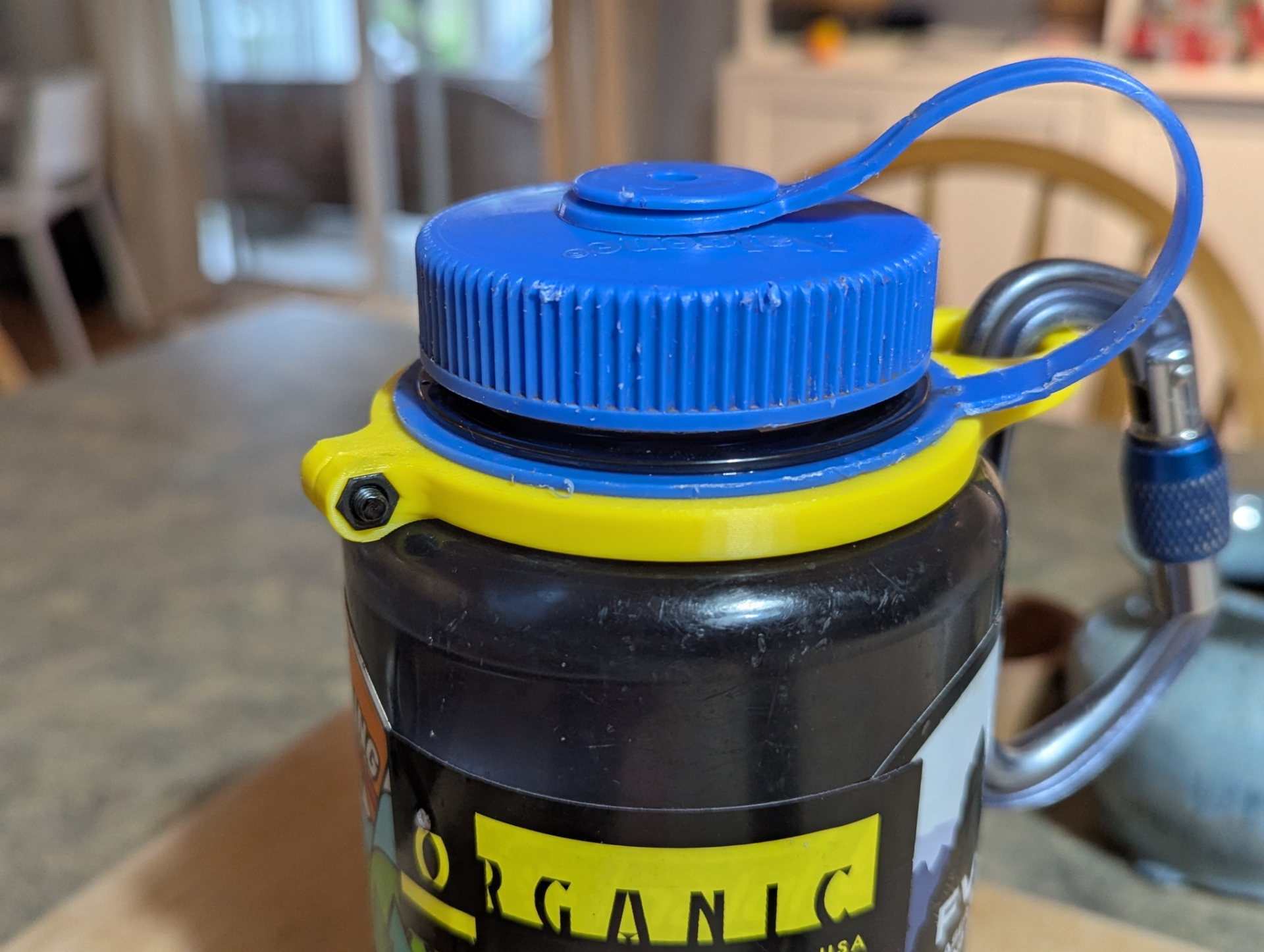
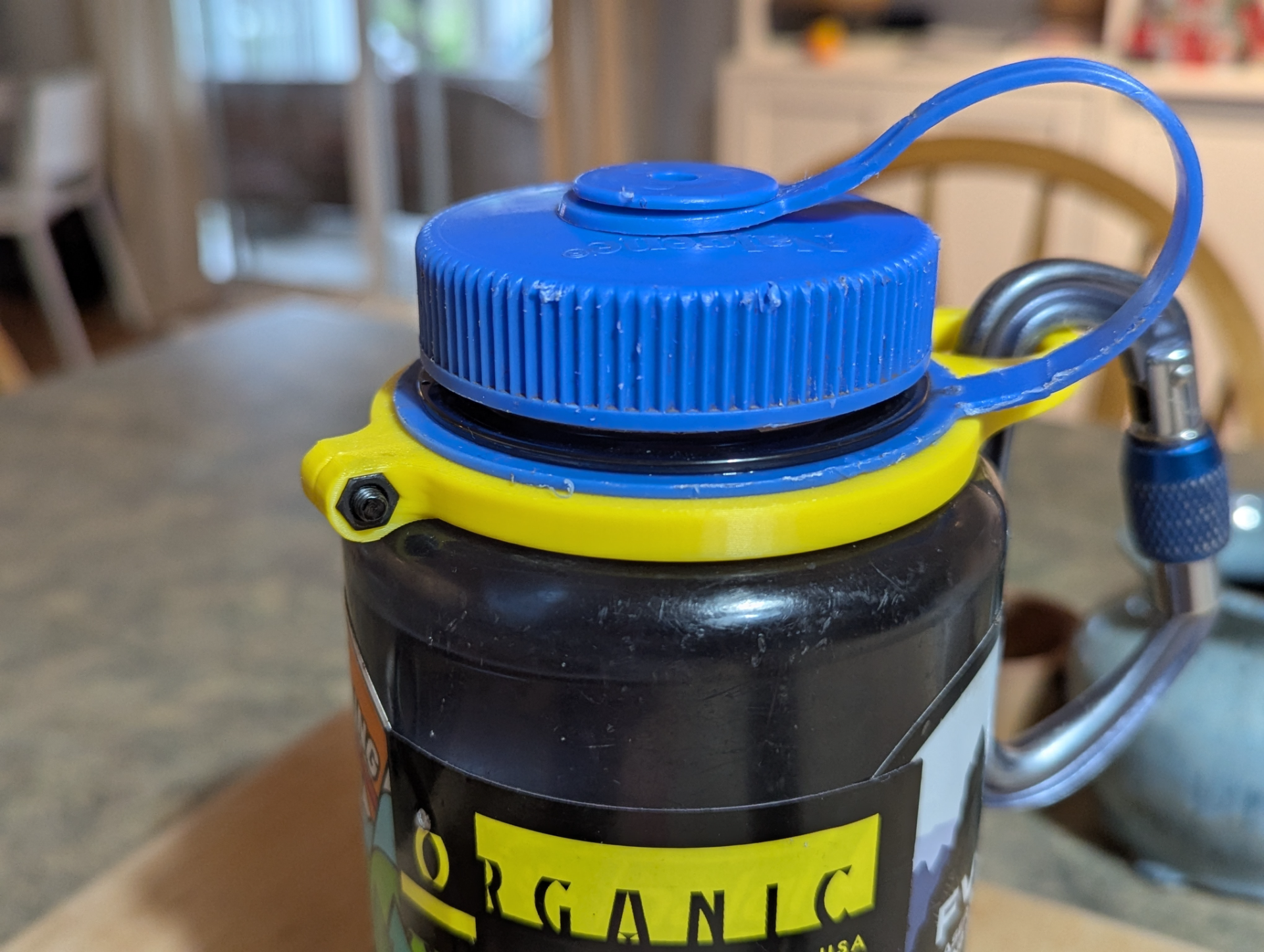
If you’ve ever wished your Nalgene had a clip point that didn’t involve the lid, this is it. The clip collar wraps around the neck of the bottle and gives you a proper attachment ring — suitable for a carabiner, a hook, a lanyard loop, or a MOLLE attachment depending on how you rig it. It’s one of those prints that makes a bottle you already love just a little more versatile.
The practical applications pile up fast: clip it to a pack hipbelt for trail hydration, hang it from a gear loop while you set up camp, attach it to a vehicle grab handle for commutes. The collar design distributes load around the bottle neck rather than relying on the lid threads, which means it’s actually more secure than clip-lid systems under lateral force.
PETG at 40% infill, 4 walls. The collar takes cyclical stress every time you clip and unclip, so don’t go lighter. Fit should be snug but not requiring force to seat — if it’s loose, scale down 1%. If you’re running this on a Nalgene that lives in a hot car, bump to ASA. Takes about 45 minutes to print and permanently upgrades a bottle you probably already carry every day. Simple idea, well executed.
What Filament Should You Use?
Here’s a quick breakdown of the three most common filaments for EDC gear so you can pick the right one for your setup:
| Filament | Hardness | UV Resistance | Durability | Best For |
|---|---|---|---|---|
| PETG | Medium | Fair | High | Everyday indoor/EDC carry, food-safe prints, flexible-tough balance |
| ABS | High | Poor | High | Rigid structural parts, heat-resistant applications (e.g. car/glove box gear) |
| ASA | High | Excellent ☀️ | Very High | Outdoor EDC, belt/bag attachments, anything exposed to sun or weather |
TL;DR: Use PETG for most EDC prints — easy to work with and tough enough. Use ASA if the piece will live outdoors or in direct sunlight. Use ABS if you need maximum rigidity and heat resistance and have an enclosure on your printer.