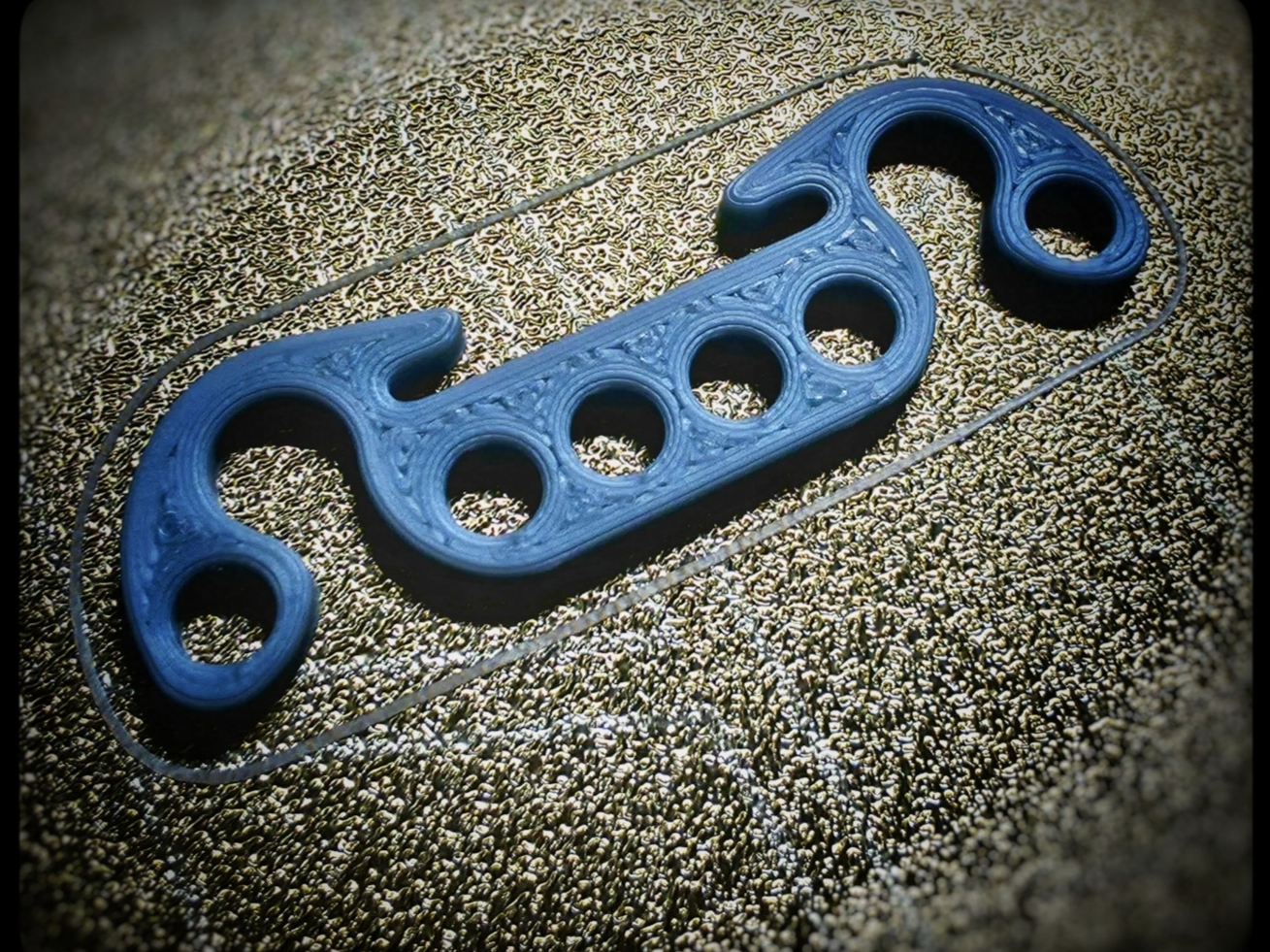
MOLLE T-Adapter for 1″ webbing / hook-and-loop and paracord
Why I Like It
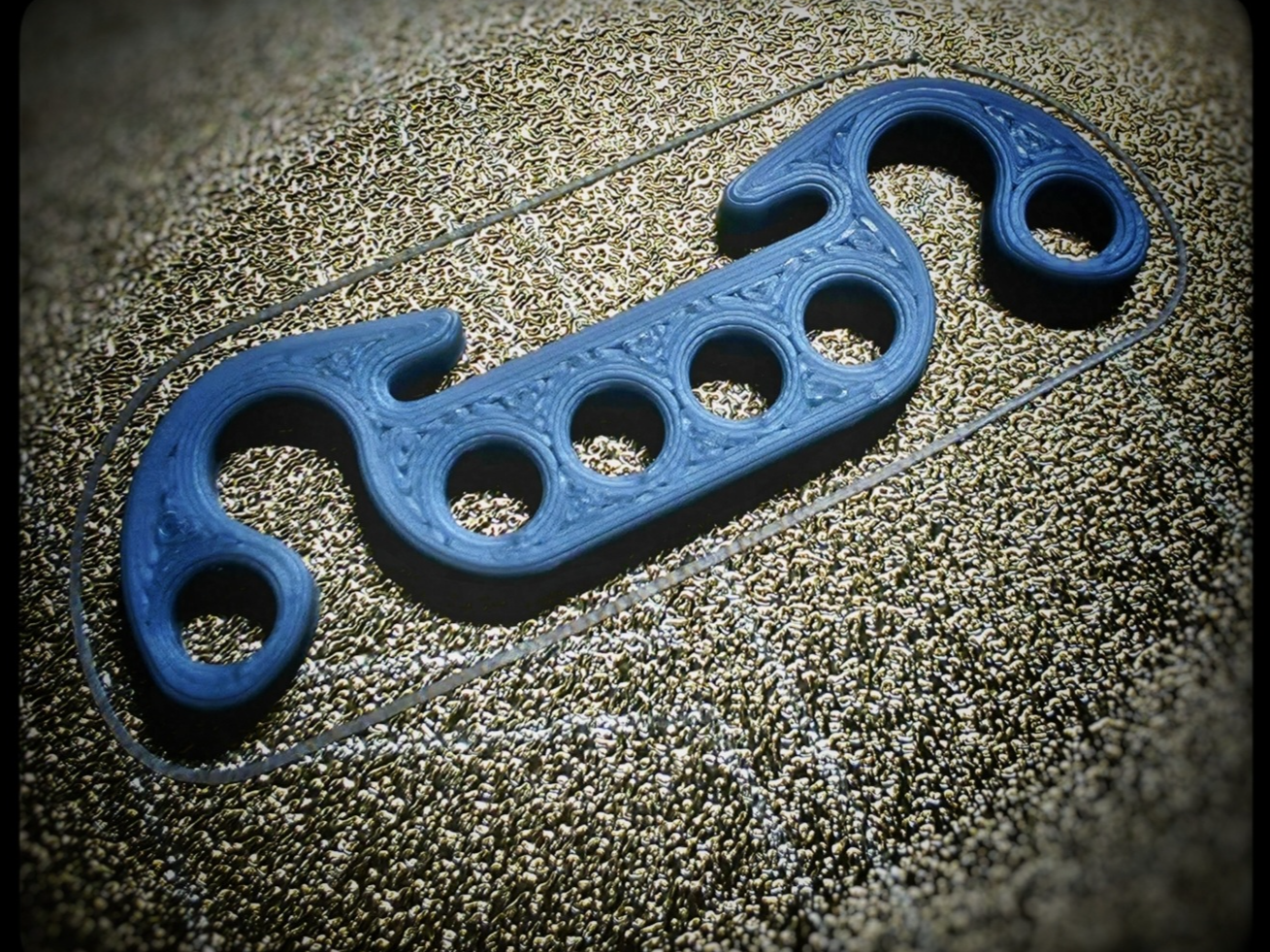
Don’t let the size fool you — this little adapter solves one of the most annoying problems in tactical gear organization. MOLLE and PALS systems are everywhere, but not all gear is stitched with the same row spacing. When your pouch is cut for odd rows and your platform runs even, you’re stuck with a misaligned mount that wobbles, digs, or just won’t lock. This adapter bridges that gap cleanly.
The geometry is straightforward but precise — the tolerances need to be right or it’ll flex under load. I recommend printing at 40–50% infill with a 3-wall perimeter for anything that’ll carry real weight. PETG handles this well indoors, but if you’re running it on a plate carrier or pack that sees sun and sweat, go ASA. It won’t soften, won’t creep, and holds up through seasons of use.
One tip: print with the flat face down, no supports needed, and you’ll get the cleanest fit on the channel teeth. Scale it up 1–2% if your MOLLE weave runs a little loose — most import platforms do. Once dialed in, it’s one of those prints you’ll replicate for every bag in your kit.
What Filament Should You Use?
Here’s a quick breakdown of the three most common filaments for EDC gear so you can pick the right one for your setup:
| Filament | Hardness | UV Resistance | Durability | Best For |
|---|---|---|---|---|
| PETG | Medium | Fair | High | Everyday indoor/EDC carry, food-safe prints, flexible-tough balance |
| ABS | High | Poor | High | Rigid structural parts, heat-resistant applications (e.g. car/glove box gear) |
| ASA | High | Excellent ☀️ | Very High | Outdoor EDC, belt/bag attachments, anything exposed to sun or weather |
TL;DR: Use PETG for most EDC prints — easy to work with and tough enough. Use ASA if the piece will live outdoors or in direct sunlight. Use ABS if you need maximum rigidity and heat resistance and have an enclosure on your printer.