Name Tag
Why I Like It
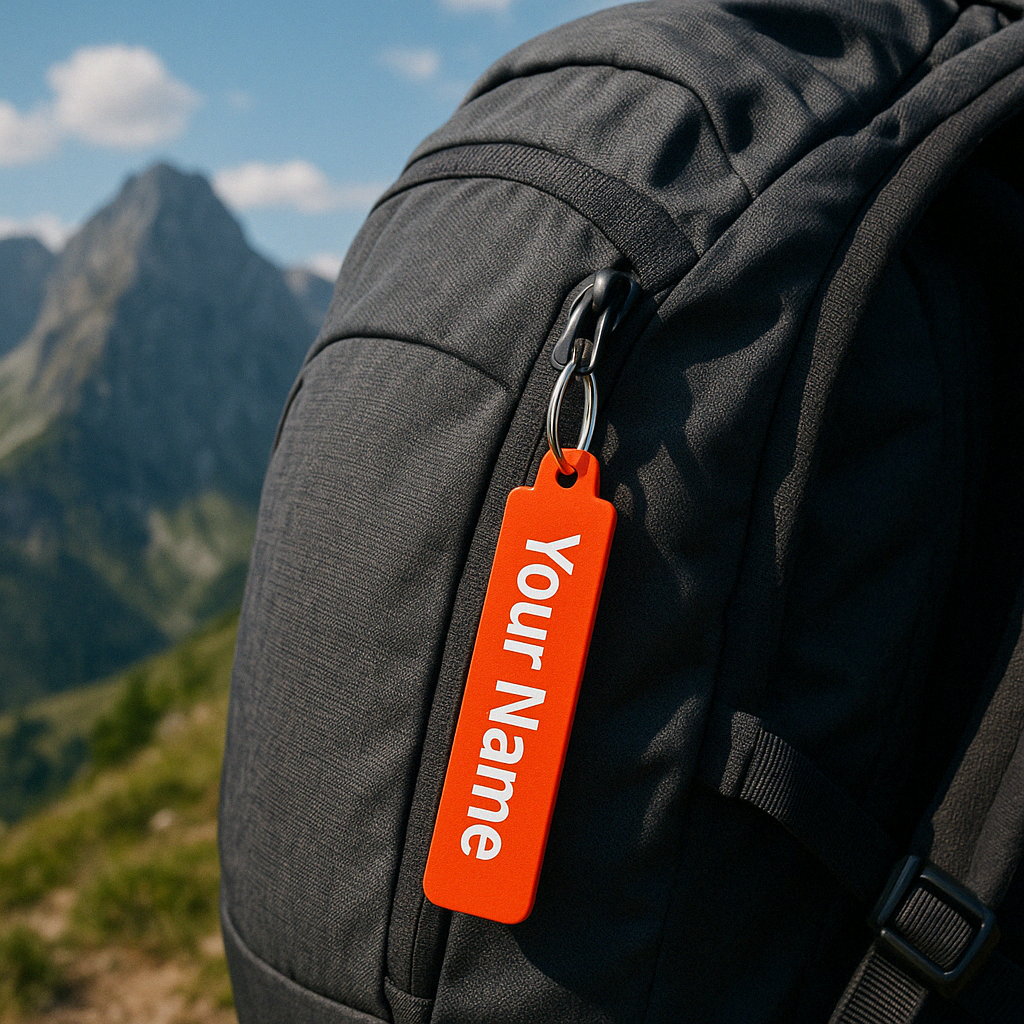
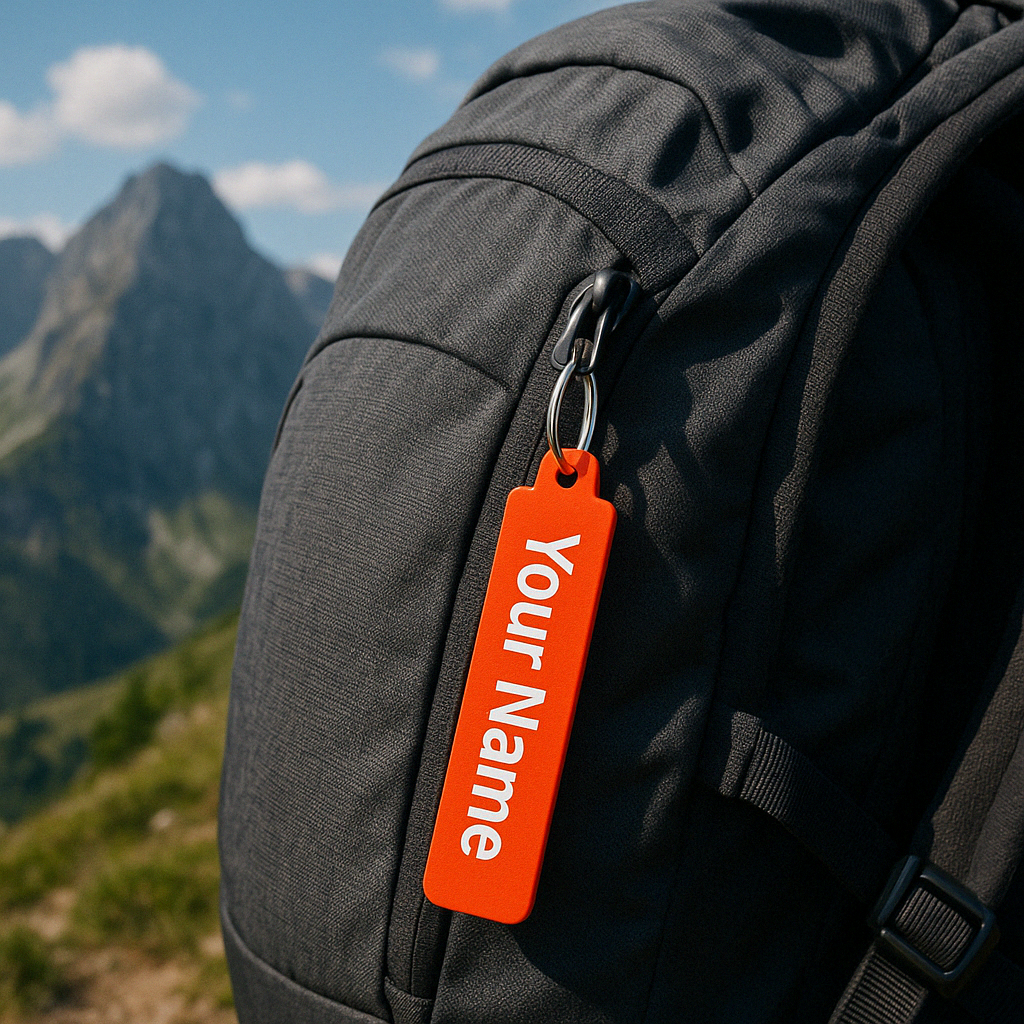
A name tag sounds basic until you’ve lost a piece of gear, mixed up equipment in a group kit, or tried to identify unmarked bags at a checkpoint. A clean, durable, 3D-printed name tag solves all three — and unlike adhesive labels or paper tags, this one won’t peel, fade, or fall off after a season of use.
The design is fully customizable in most slicers. Add your name, callsign, unit, or any short identifier as embossed or debossed text directly in the file. PrusaSlicer, Bambu Studio, and Orca all support text-to-mesh tools that make this a 10-minute customization. Debossed text (sunken in) with a contrasting color filament pause mid-print is the cleanest finish — two-color without needing a multi-material setup.
Material choice here is determined by environment. Indoor use on a lanyard or luggage? PETG is fine and comes in a wider color range. Outdoor use on a pack, vest, or kennel? ASA only — UV exposure will chalk and crack PETG over time outdoors. Run 3 walls and 25% infill; there’s no load-bearing here, just rigidity. Pair it with a short loop of paracord or a Chicago screw and it’ll mount to virtually anything with a hole in it.
What Filament Should You Use?
Here’s a quick breakdown of the three most common filaments for EDC gear so you can pick the right one for your setup:
| Filament | Hardness | UV Resistance | Durability | Best For |
|---|---|---|---|---|
| PETG | Medium | Fair | High | Everyday indoor/EDC carry, food-safe prints, flexible-tough balance |
| ABS | High | Poor | High | Rigid structural parts, heat-resistant applications (e.g. car/glove box gear) |
| ASA | High | Excellent ☀️ | Very High | Outdoor EDC, belt/bag attachments, anything exposed to sun or weather |
TL;DR: Use PETG for most EDC prints — easy to work with and tough enough. Use ASA if the piece will live outdoors or in direct sunlight. Use ABS if you need maximum rigidity and heat resistance and have an enclosure on your printer.