Video Overview
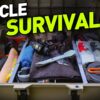
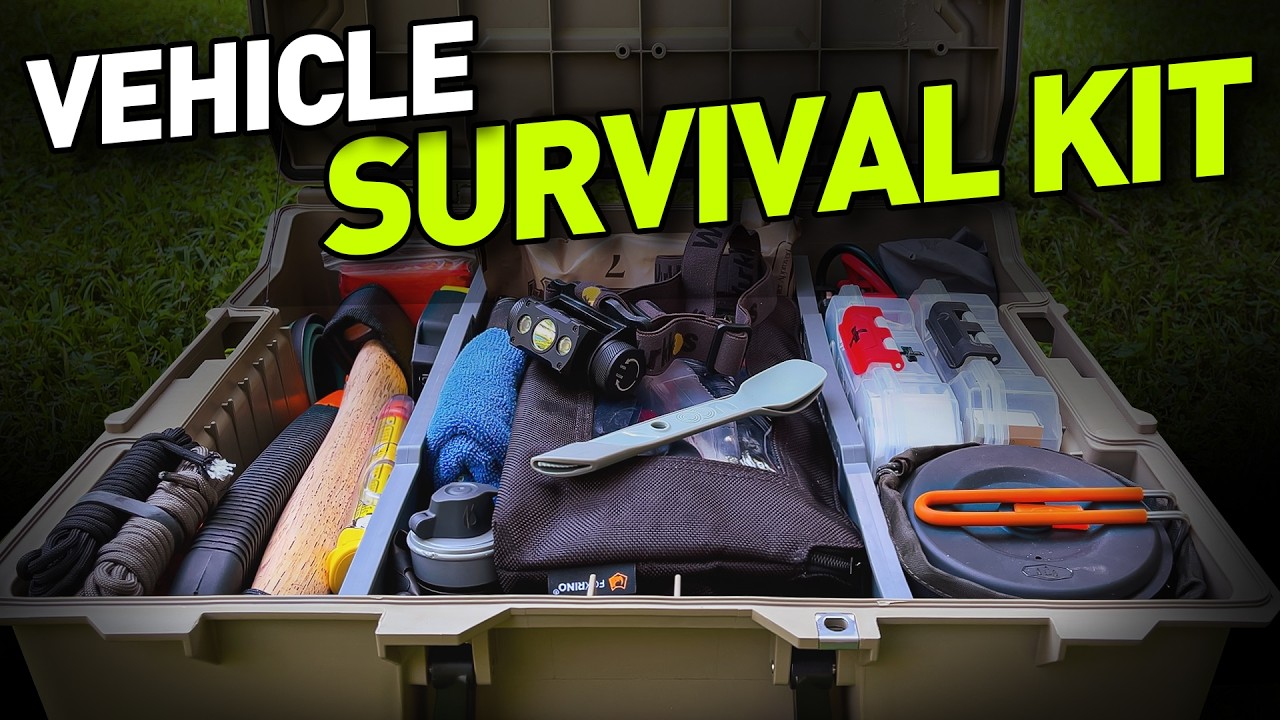
Gear Talk walks through a vehicle kit packed into one DECKED Halfrack 32L case. The case is slim, opens with one hand, and uses removable dividers so tools stay in their own slots. The video covers lights, a saw, hand tools, water, a jump starter, and a small cook set. Gear Talk built it for storms, blocked back roads, and the hours a car has to sit still. Thanks to Gear Talk for showing the box that actually rides in the vehicle, not a pile of gear that never leaves the garage.
Items & Gear List
- DECKED Halfrack 32L case – Purchase on Amazon
- Ka-Bar Becker BK9 – Purchase on Amazon Fixed blade. Check local laws before you carry one.
- MSR PocketRocket Deluxe – Purchase on Amazon
- Propane canister adapter – Purchase on Amazon
- MSR Quick 2 cook set – Purchase on Amazon
- HydraPak Seeker 2L – Purchase on Amazon
- HydraPak 42mm filter cap – Purchase on Amazon
- Clear-window tool pouch – Purchase on Amazon
- Extendable storage containers – Purchase on Amazon
- REXBETI 14-inch folding saw – Purchase on Amazon
- Wiha CentroFix bit holder – Purchase on Amazon
- Klein Tools 1010 long-nose cutter – Purchase on Amazon
- DEWALT step drill bit – Purchase on Amazon
- GEARWRENCH 10-inch indexing pry bar – Purchase on Amazon
- DURATECH 8-inch adjustable wrench – Purchase on Amazon
- KNIPEX 8-inch long-nose pliers – Purchase on Amazon
- REXBETI 8-inch pry bar – Purchase on Amazon
- Climbing rope – Purchase on Amazon
- Rolling Square inCharge XL cable – Purchase on Amazon
- SKYOAK folding reading glasses – Purchase on Amazon
- KNIPEX Cobra 7-1/4-inch pliers – Purchase on Amazon
- PB Swiss empty BitBlock – Purchase on Amazon
- SE 30-inch magnetic pickup tool – Purchase on Amazon
- WORKPRO 8-inch bolt cutter – Purchase on Amazon
- KNIPEX 8-inch angled diagonal cutters – Purchase on Amazon
- KNIPEX Cobra 10-inch pliers – Purchase on Amazon
- Hulkman Alpha85 jump starter – Purchase on Amazon
- QSP Penguin V2 – Purchase on Amazon
- Maxxeon Cyclops work light – Purchase on Amazon
- Klymit Roamer tarp – Purchase on Amazon
- KNIPEX 7-1/4-inch pliers wrench – Purchase on Amazon
- Ouligay hinged tins – Purchase on Amazon
- Wurkkos HD01 PRO – Purchase on Amazon
- Wurkkos HD50 headlamp – Purchase on Amazon
- Kevlar braided cord – Purchase on Amazon
Editor’s Insight
Gear Talk picked the Halfrack for the handle and the one-hand latch. A box with latches on both sides is slower when you are standing in a storm. This one squeezes open and the lid comes up. It is also sized for a DECKED drawer, so it can live in a truck system instead of sliding around a trunk. The dividers come out, which is how a saw, a rope, and a cook kit share one case without turning into a junk drawer.
The lights are the first things worth grabbing. The Wurkkos HD50 is a headlamp with a removable battery and a magnetic side, so the strap can come off and the light can sit on a car panel. The Wurkkos HD01 PRO adds a bright beam, a side light, a UV mode, and a green laser Gear Talk uses as a far signal. A Maxxeon Cyclops work light is the third lamp, and it charges by USB-C. Hands-free light is the point. A phone flashlight is not a plan when both hands are on a tire.
Water and power sit next to the lights. A HydraPak Seeker holds 2 liters and packs flat. The matching 42mm filter cap is the piece that turns stored water into something you are willing to drink. The Hulkman Alpha85 is the jump starter for a battery that will not turn over. A Rolling Square inCharge XL cable covers the phone. None of that helps if it is buried under a saw, which is why the dividers matter more than another gadget.
The tool side is a small shop. Knipex pliers, a Klein long-nose cutter, a Gearwrench indexing pry bar, a Duratech wrench, a Wiha bit holder, a DeWalt step bit, and a Workpro bolt cutter cover the jobs Gear Talk has already had on the roadside. A Rexbeti folding saw is there for a tree across the road. Gear Talk also carries a cheap axe that was sharpened at home. The description does not link that axe, so this post does not invent a product page for it. The same rule covers the Milwaukee gloves and the spare fuses. They are in the box. They are not in the link list.
Two knives are linked. The Ka-Bar Becker BK9 is a fixed blade. Gear Talk treats it as a hard-use camp knife. A fixed blade has different carry rules depending on where you are, so check local law before you copy that choice. The QSP Penguin V2 is the smaller folder. This post does not walk through how either knife is used. The rope is in the list because a stuck vehicle needs a line. This post does not tell you how to pull a car.
The cook kit in the description is an MSR PocketRocket Deluxe stove, a small adapter so the stove can take more than one canister size, and an MSR Quick 2 pot set. Gear Talk also keeps a sealed tin in the case and opens it at the end of the video. It is toilet paper, enough for two people. No brand is named, so no link is added. An epinephrine auto-injector rides in the kit because of family allergies. That is a personal choice, not medical advice, and the description has no product URL for it.
That is the trade Gear Talk is making. One case, one latch, and only the items that have already earned a roadside job. Thanks again to Gear Talk for opening the box instead of listing a fantasy loadout.
Closing Remarks
Watch Gear Talk’s vehicle kit before you copy the list. The video shows why the Halfrack stayed, which lights get used first, and why a saw rides next to a jump starter. The links above go to the products in the description. The axe, the gloves, the fuses, and the tin of toilet paper have no product link here. Hit play, then say what you would add for a night stuck in a storm. If a kit only works when it is spread across the garage, it is not the kit that will be in the car.